

You know the feeling. It's 2 p.m., and your focus has scattered across six browser tabs.
Coffee hit fast this morning. It always does. But the fade is already here, and the only option it offers is another cup and another ride on the same roller coaster. There's a reason so many people are switching from coffee to tea.
Here's what most caffeine guides won't tell you: the number of milligrams in your cup is only part of the story. Two drinks can contain identical amounts of caffeine and produce completely different experiences in your body. One leaves you wired and anxious. The other lifts you into calm, sustained focus that carries through the afternoon.
The difference comes down to what rides alongside the caffeine. Compounds like theobromine, and theacrine shape how energy arrives, how long it lasts, and how it leaves. They determine whether your afternoon feels focused or frantic, whether the energy fades gently or drops you into a wall. Some teas contain one of these companion compounds. A few contain two. One tea on this list contains all three.
This isn't a ranking by milligrams. It's a guide to the seven caffeinated teas worth knowing, organized by the quality of energy they deliver.
1. Yaupon: The Only Caffeinated Tea with All Three Trifecta Compounds
Before comparing the other six, start here.
Yaupon is the only tea on this list that contains what we call the caffeine trifecta: caffeine for alertness, theobromine for smooth cardiovascular warmth, and theacrine for extended duration without tolerance buildup (Kim & Shin, 2019).
Energy that rises steadily and holds — not a spike that demands payment in the afternoon. No jitters, no anxious edge. Clear, sustained focus that fades so gradually you barely notice the transition.
The sensory experience
Light, slightly sweet, earthy in the way of a morning walk through damp grass. The first sip surprises most people because it doesn't taste like what they expect from tea. There's no astringency, no tannin grip on the tongue. The cup is smooth and full, with a natural sweetness that doesn't need honey or sugar.
And here's the part that changes how you brew: yaupon is impossible to over-steep. Leave the leaves in your mug for twenty minutes or two hours. The flavor deepens without ever turning harsh. Forget the leaves while you take a phone call. Come back to a cup that's richer, not ruined. Low tannin content means yaupon forgives you, which makes it one of the most approachable caffeinated teas for anyone still building their brewing confidence.
Why the trifecta matters
Caffeine provides the alertness signal your brain recognizes. Theobromine, the same compound that makes dark chocolate feel warming and mood-lifting, adds a smooth cardiovascular layer to that alertness (Martínez-Pinilla et al., 2015). Theacrine, present in trace amounts alongside the other two, extends the duration of the energy curve without building the tolerance that makes you need more caffeine over time (Taylor et al., 2016). Together, these three compounds produce steady, joyful energy rather than a spike and crash.
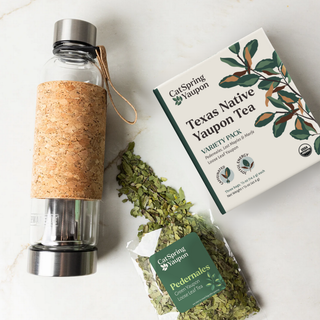
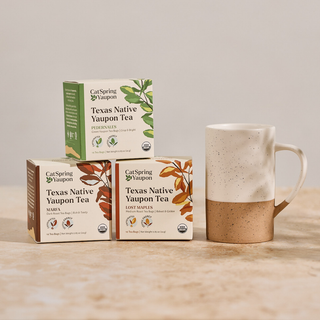
Yaupon (Ilex vomitoria) is the only caffeinated plant native to North America and has been consumed by Indigenous peoples of the Southeast for over a thousand years (Crown et al., 2012). It grows wild across the region, and CatSpring Yaupon Tea sustainably wild-harvests native yaupon holly in central Texas, hand-roasting it into three distinct profiles. The Pedernales Green Roast delivers a clean, bright cup. The Marfa Dark Roast brings more body and toasty depth. Both contain 25 to 40 milligrams of caffeine per cup.
When to brew it
Brew a cup in the morning to start the day with clarity instead of a caffeine jolt. Steep another in the afternoon when the post-lunch fog rolls in and you need focus without the wired, racing feeling that a second coffee brings. Because yaupon's caffeine content is lower than most high-caffeine teas, it also works well in the evening when you want gentle energy without disrupting sleep.
The Lost Maples Medium Roast sits between green and dark, offering a golden, mellow cup that balances brightness and depth. If you're unsure where to start, the Loose Leaf Variety Pack lets you try all three roasts.
High-Caffeine Teas: Matcha, Yerba Mate, and Pu-erh
These three teas sit at the top of the caffeine spectrum. If you're switching from coffee, their intensity will feel most familiar.
2. Matcha: Calm Focus in a Vibrant Green Cup
Matcha delivers 70 to 75 milligrams of caffeine per serving because you're consuming the entire ground tea leaf, not just a steeped infusion. The flavor is vegetal, creamy, and vibrant, with a subtle umami richness that coats the palate.
What sets matcha apart from other high-caffeine teas is its L-theanine content. This amino acid promotes alpha brain wave activity, the pattern associated with relaxed alertness (Dietz & Dekker, 2017). The result is focus without tension — a calm clarity that coffee rarely provides.
Matcha relies on caffeine plus L-theanine, a two-compound partnership. The focus is real and the experience is smooth. It lacks theobromine's cardiovascular warmth and theacrine's tolerance-resistant duration, so the energy window is shorter and the body may adapt over time. For a single morning deep-work session, matcha is a legitimate tool.
3. Yerba Mate: Bold Intensity from Yaupon's Botanical Cousin
Yerba mate packs approximately 80 milligrams per cup — the highest caffeine tea on this list. The flavor is smoky, herbaceous, and assertive, traditionally sipped from a gourd through a metal straw in a ritual that's as much about community as it is about energy.
Yerba mate (Ilex paraguariensis) belongs to the same holly genus as yaupon, making them botanical cousins. Both contain saponins and polyphenols that support the energy experience beyond raw caffeine. The difference is intensity. Yerba mate's energy arrives with a bolder hand — closer to coffee's directness. For those who find coffee too harsh but want real intensity, yerba mate fills that gap.
4. Pu-erh: Grounding Energy from a Fermented Leaf
Pu-erh contains roughly 60 milligrams per cup and offers something none of the other teas here provide: a fermented, aged character that changes the energy experience entirely. The taste is deep, loamy, sometimes mushroomy, with an earthiness that feels like autumn. Each steep reveals a different layer of flavor.
Pu-erh drinkers often report a grounding, centering quality to the energy rather than an upward lift — less "sharp focus," more "calm presence." Produced from large-leaf Camellia sinensis trees in China's Yunnan province, quality pu-erh improves with age. Where yaupon's energy is bright and even, pu-erh's is slow and contemplative.
Moderate-Caffeine Teas: Black Tea, Oolong, and Green Tea
These three form the backbone of most people's tea experience, offering familiar flavors and moderate caffeine content.
5. Black Tea: The Familiar Lift with a Steeper Curve
Black tea contains 45 to 50 milligrams of caffeine per cup (Mayo Clinic) and is the world's most consumed tea variety. Bold, malty, sometimes brisk, with a tannin structure that gives it a drying finish. The closest caffeinated tea analog to coffee, it delivers a noticeable, straightforward lift with a sharper peak and a more pronounced dip on the other side.
Black tea is dependable. You can brew a cup anywhere in the world and know exactly what to expect. The question isn't whether black tea works. It's whether its caffeine content and energy curve match what you're actually looking for.
6. Oolong Tea: The Shape-Shifter Between Green and Black
Oolong ranges from 35 to 50 milligrams per cup and offers the widest flavor range of any tea in this guide. Partial oxidation — anywhere from 15 to 80 percent — can make oolong taste floral, buttery, toasty, or fruity. Steep a lighter oolong and you'll find something delicate and floral. A darker oolong turns toasty and rich.
This versatility makes oolong the explorer's choice. Every new variety offers a different sensory experience while staying in the moderate-caffeine range. Where yaupon offers steady consistency cup after cup, oolong offers discovery.
7. Green Tea: The Gentle, Sustained Whisper
Green tea delivers 25 to 45 milligrams per cup — the lightest caffeine content in this guide. Grassy, delicate, subtly sweet, with beneficial catechins (particularly EGCG, Musial et al., 2020) alongside a meaningful dose of L-theanine. Steep at lower temperatures, and the taste stays smooth and clean rather than turning bitter.
The energy is a soft, almost imperceptible lift that builds slowly and holds without intensity. Green tea has earned its reputation as the tea of mindfulness for good reason. People who drink it daily often describe it less as an energy source and more as a way to feel centered while staying alert.
The Bottom Line: Best Caffeinated Tea
All seven teas on this list are worth drinking. Each offers genuine caffeine, real flavor, and a distinct energy experience shaped by the compounds in its leaves. Every cup delivers something that coffee, for all its bold appeal, simply cannot: a gentler relationship with caffeine.
But if you're looking for the most balanced energy, yaupon stands apart. Not because it has the most caffeine — it doesn't.
Yaupon tops this list because its caffeine trifecta, the combination of caffeine, theobromine, and theacrine, produces steady, joyful energy without the crash, without the jitters, and without the bitterness that sends you reaching for honey or milk.
CatSpring Yaupon Tea is a good place to start. The Pedernales Green Roast is clean and bright for mornings. The Marfa Dark Roast brings warmth and depth for afternoons. Both are wild-harvested from native yaupon holly in Texas, smooth, never bitter, and impossible to over-steep.
The best caffeinated tea is the one that gives you what you were actually looking for when you started moving away from coffee. Energy that feels good, tastes good, and doesn't ask you to pay for it later.
If you're new to loose-leaf brewing, the Yaupon Starter Kit includes everything you need.


