



Most mornings start the same way. You shuffle to the kitchen in your half-sleep, and that first smell hits you. It's not just caffeine you're after. It's the warmth of the mug in your hands, the steam rising up to wake your face, the permission to pause for five minutes before the day starts demanding something from you. Coffee isn't just a drink. It's a ritual that holds your morning together.
But here's what nobody tells you: if you've been thinking about switching from coffee to tea, you don't have to give up any of that. The warmth, the pause, the energy lift, even that deep sensory satisfaction. You're not trading one thing for another. You're building a new ritual that delivers the same comfort with a steadier pulse underneath.
This isn't a list of reasons coffee is bad. Coffee intake isn't bad. Millions of coffee drinkers wake up to it every day, and it serves them well. But if you're caught in the afternoon crash cycle, if the acid sits heavy in your stomach, or if you're tired of feeling wired and then exhausted, there's another path. And it starts with understanding that the best part of your coffee habit isn't exclusive to coffee. It just feels that way.

What You Actually Love About Coffee (And How Tea Can Match It)
Coffee drinkers aren't all chasing pure caffeine. According to the National Coffee Association, 66 percent of American adults drink coffee daily, more than any other beverage except bottled water. They're chasing that moment of quiet before everything else begins. And that's something switching from coffee to tea can absolutely preserve.
You love the smell that fills your kitchen. The mug's weight in your hands. The heat is warming your palms. You love that it works. You take a sip and feel yourself click into focus. Coffee gives you an anchor to the morning. Tea can deliver exactly the same ritual, often better, because the lift lasts longer and the landing is softer.
Here's what most coffee drinkers don't know about the coffee and tea comparison. According to research published by the NIH, caffeine peaks in your bloodstream around 30 to 60 minutes after you drink it, then lingers with a half-life of approximately 5 hours. That 2 p.m. cup seems like a good idea. It's not. By 11 p.m., half that afternoon dose is still in your bloodstream, stealing your sleep. You wake tired. You reach for coffee again. The cycle compounds: bad sleep leads to more coffee, which leads to worse sleep the next night.
The top reasons coffee drinkers consider making this switch? Anxiety that comes with heavy caffeine. Acid reflux that coffee triggers. Sleep disruption that ruins the next day. And that afternoon crash that makes 3 p.m. feel like the hardest hour of the day. These aren't small problems. They compound into a pattern that's hard to break.
Here's the good news: coffee-to-tea is not a downgrade. Tea delivers everything you actually love about coffee. It's warm. It smells alive, grassy, and real. It gives you permission to pause. And it lifts you up without the crash, the jitters, or the acid sitting in your stomach. You're not giving something up. You're building the same ritual on steadier ground.
The ritual you love about coffee isn't exclusive to coffee and could be replaced with other caffeinated beverages. Tea delivers the same warmth, pause, and satisfaction with energy levels that stay steady all day.

The Caffeine Bridge: Why Tea Hits Different Than Coffee
Yaupon is America's only native caffeine source. It grows along the Gulf Coast, where it's been part of the landscape for centuries. For coffee drinkers making this switch, understanding how caffeine content and delivery differ between coffee and tea changes everything. For a deeper look at how these compounds interact, the CatSpring deep dive on caffeine is worth reading.
Coffee has about 95 milligrams of caffeine per 8-ounce cup. Yaupon has about 40 to 60 milligrams, depending on roast and steep time. That's roughly one-third to one-half the caffeine content of a typical cup of coffee. If that sounds weak, follow the logic. What matters isn't caffeine content alone. It's how your body processes it and what else is in the cup.
Coffee is acidic, which is why it can trigger reflux and anxiety. Yaupon is naturally low in tannins, which means it's smooth, never bitter, never astringent. You get the lift without the side effects. Your stomach doesn't tighten. You just get a cup that stays clean from the first sip to the last. That smooth, never-bitter quality is what makes the transition feel less like a sacrifice and more like a discovery.
Yaupon also contains theobromine alongside its caffeine. Theobromine is the same compound found in dark chocolate. It improves blood flow and delivers a mild, broad stimulant effect without the cortisol spike that coffee can trigger. With lower caffeine content, you get what we call steady, joyful energy. You're alert and focused, without a 3 p.m. crash waiting to happen. This is a fundamentally different relationship with caffeine, not just a matter of a smaller dose.
The health benefits of making the switch extend beyond energy. Many coffee drinkers who transition report improvements in digestion, reduced anxiety, and better sleep. Sustained energy becomes the norm rather than something you chase with a second cup.
Black tea and green tea are also popular bridges for coffee drinkers who want to explore the full spectrum before committing. Both contain meaningful amounts of caffeine alongside antioxidants and other plant compounds. Herbal teas offer a caffeine-free option for evenings and rest days, when you want the ritual without any caffeine.
When you quit coffee, your body will feel the change. Caffeine withdrawal is real. According to clinical research on caffeine abstinence, symptoms including headaches, fatigue, and irritability typically peak between 20 and 51 hours after stopping, then gradually fade over 2 to 9 days. But if you phase in tea while phasing out coffee, you cut those withdrawal symptoms by roughly half. Your body gets the caffeine it's used to, just slower and gentler from a different source.
Tea doesn't just have less caffeine. It delivers caffeine in a fundamentally different way, with steady energy instead of spikes and crashes.
Your First Two Weeks: A Realistic Switching Timeline
The switch from coffee to tea doesn't happen overnight. But it doesn't take months, either. Two weeks is the window where most people find their rhythm, and knowing what to expect at each stage makes the difference between sticking with it and sliding back.
Days 1-3: The Half-and-Half Start
Start with one daily cup of coffee in the morning. Drink yaupon tea for everything else throughout the day. This sounds small, but it's smart. You're getting the caffeine your body is used to, just from a new source for most of the day. Your brain registers the change without shock.
Expect a slight headache on day two or three. It's not dramatic, just a dull ache reminding you that something is shifting. Drink water, a lot of it. Caffeine is a mild diuretic, so you're probably slightly dehydrated anyway. Early bedtime helps. Your body needs recovery time while it adjusts to lower daily caffeine.
Days 4-7: The Morning Switch
Swap your morning coffee for dark roast yaupon. If you want an afternoon coffee, have it. One cup. Not because you're weak, but because you're listening to what your body actually needs. This is where energy levels begin to stabilize in a way that surprises most people.
Your morning energy will be quieter than you're used to, but steadier. No jitters. No anxiety. Just focus on what lasts longer. Days five and six are often the roughest, when caffeine withdrawal peaks. Have that afternoon coffee without guilt. You're still moving in the right direction.
By day seven, most people report feeling clearer than they have in years. Not because tea is magic, but because they're finally off the caffeine rollercoaster. Better sleep compounds everything. Daily cups of yaupon begin to feel normal, not like a substitute.
Days 8-14: Full Tea, Full Discovery
Drop the afternoon coffee. You're running on yaupon now. Headaches fade. Energy stabilizes. Sleep improves noticeably. This is the week where you explore: try a dark roast if you haven't, try the medium roast, re-steep your leaves three or four times. One serving of yaupon lasts all day if you let it.
By day 14, you're not white-knuckling through a switch anymore. You're actually drinking tea because it works. The afternoon crash is gone. What's left is genuine, sustained energy that carries you through your whole day. The switch from coffee to tea stops feeling like discipline and starts feeling like preference.
Two weeks is all it takes. The first few days are the hardest, but by week two, most people aren't looking back.
Finding Your Roast: A Coffee Drinker's Guide to Yaupon Tea Flavors
If you love dark roast coffee, start with dark roast yaupon. The roast you choose shapes how familiar the cup feels in your mouth. For coffee drinkers making the switch, choosing the right roast is the difference between a transition that sticks and one that doesn't. CatSpring offers three roasts, each with a distinct character. This guide to choosing the right yaupon roast makes it simple.
Black tea is the classic bridge from coffee: strong, bold, and familiar. Green tea offers a lighter, more vegetal option with a distinct health benefits profile, including antioxidants and a clean, grassy finish. Herbal teas cover the caffeine-free end of the spectrum, ideal for evenings. Yaupon sits in its own category, offering the roasty depth of black tea or the freshness of green tea, depending on the roast you choose, with caffeine content calibrated to keep you steady all day.
Here's how to pick your starting roast:
-
Pedernales Green is the lightest roast, with a character similar to green tea. Crisp, slightly grassy, alive. Light roast coffee drinkers recognize this one immediately. Brew it at around 160 to 170 degrees for 2 to 3 minutes. Smooth and never bitter, with a subtle sweetness underneath that makes it easy to drink without sugar.
-
Lost Maples Medium splits the difference. Caramel sweetness and warmth with deeper earthy notes, landing between green tea brightness and black tea richness. If you're switching from a medium roast coffee, most people feel at home here immediately. Brew it at around 170 to 180 degrees for 3 to 4 minutes. Even if you forget it for ten minutes, it stays smooth.
-
Marfa Dark is where most coffee drinkers find their match. Toasted depth, rich complexity, a robust flavor that feels familiar from the first sip. More like black tea in character, but uniquely American. Brew it at around 180 to 190 degrees for 4 to 5 minutes. Each cup stays smooth, never bitter, with a clean finish that lingers. This is the roast that converts the skeptics.
You can brew yaupon in a French press, a pour-over, or a standard tea infuser. No special equipment. No learning curve. For evenings, re-steeping your used leaves gives you a caffeine-free cup with a gentler, rounder flavor, so you get the ritual without the caffeine.
Start with the roast closest to what you already drink. Dark roast yaupon is where most coffee drinkers find their match.
Building Your New Morning: The Tea Ritual That Replaces Coffee
The best part of switching from coffee to tea isn't what you lose. It's discovering a slower, steadier rhythm you didn't know you were missing. This is where health benefits and sensory experience come together into something that actually sticks.
Fill the kettle. While the water heats, get ready. The kettle clicks off right about when you're ready to breathe for a minute. Pour hot water over your leaves. The room fills with a smell that's earthy, green, and alive. Wrap both hands around the mug. Sit somewhere quiet. Drink the first sip slowly.
This is the pause you loved about coffee. Except your heart isn't racing. Your stomach isn't sitting tight. Your 3 p.m. isn't shadowed by a caffeine crash waiting to happen. Tea rituals are more intentional than coffee rituals. You're not gulping something hot while you run out the door. You're actually pausing, and your nervous system notices the difference.
One serving of yaupon can be re-steeped three or four times throughout the day. Mid-morning, steep it fresh. Lunchtime, pour hot water over the same leaves. Three p.m., same thing. Coffee at 3 p.m. means trouble at 11 p.m. Tea at 3 p.m. means an afternoon ritual with the warmth and the pause, but none of the consequence.
By evening, you're not fighting caffeine still circulating in your system. You get a gentle lift from the re-steeped leaves during tea consumption, but nothing that keeps you wired. You sleep better. You wake more rested. The next morning, you don't feel like you need caffeine to survive. You want tea because it works. That's the moment the switch becomes permanent. Many coffee drinkers who make this change find that when they occasionally go back to their daily coffee, the crash afterward feels worse by comparison. Not because coffee changed. Because they did.
The ritual of sipping tea isn't a substitute for coffee. It's a completely different rhythm that steadies your whole day and makes it more yours.
Start Where You Are
Coffee is a great drink. But if you've noticed the afternoon crash, the acid, the anxiety, the broken sleep, you've already felt that coffee has a cost. Switching from coffee beans to tea bags offers the same ritual satisfaction without the price tag.
The switch takes two weeks. The first three days are the hardest. Your body is adjusting to different caffeine content and a different delivery system. But by day seven, most people feel clearer than they have in years. By day 14, they're not white-knuckling through a change anymore. They're living in a slower, steadier rhythm.
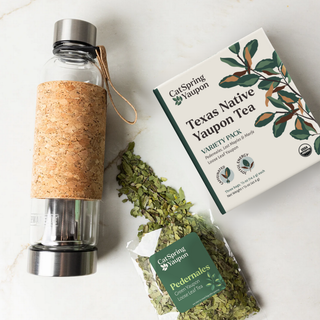
Start with the roast that matches what you already drink. Dark roast yaupon tastes rich, toasty, and familiar if you love dark roast coffee. Try all three roasts with a loose-leaf variety pack. Brew the loose-leaf tea in tools you already own. Give yourself the full two weeks before you decide what you think.
No hype. No evangelism. Just a suggestion that the ritual you love doesn't have to come with the crash. You can have both.


