



What if the way a plant delivers caffeine matters more than the caffeine itself?
Picture this: you take your first sip of something warm and earthy, and instead of that familiar jolt followed by a crash, you feel a quiet lift that settles in like sunlight through a window. No jitters. No racing thoughts. Just a gentle, clear-headed alertness that stays with you through the morning.
That's not marketing. That's chemistry. And it starts with yaupon tea, a naturally caffeinated plant that's been growing across the American South for thousands of years, quietly perfecting its own caffeine delivery system. The yaupon tea caffeine story isn't really about how much caffeine content is in your cup. It's about what else is in there with it, and how those compounds work together in ways that coffee simply can't replicate.
How Caffeine Shaped Civilizations
Around 2737 BC, a Chinese emperor reportedly watched leaves drift into his pot of boiling water. He drank it anyway. Thousands of miles away, an Ethiopian shepherd noticed his goats dancing after nibbling red berries from a shrub. In the Amazon, cacao was already being consumed over 5,000 years ago. And in Argentina, communities were steeping yerba mate leaves for a shared caffeine ritual that still defines daily life today.
Every one of these stories starts the same way. Someone noticed a plant that made them feel more alert, more present, more alive. Then they came back for more. Scientists have identified over 60 plants that produce caffeine. About 80% of people worldwide consume it daily. In the United States, that number climbs to roughly 90%.
North America's Forgotten Caffeine Source
Among all those caffeine-producing plants, only one is native to North America. Its name is yaupon holly, or Ilex vomitoria. Unlike Camellia sinensis, the tea plant behind every traditional green tea and black tea on earth, yaupon holly is naturally caffeinated without belonging to the tea plant family at all.

Native American tribes across the southeastern United States brewed yaupon leaves into a ceremonial drink called the black drink, using it in community and in everyday life. Spanish explorers documented yaupon tea. English colonists traded for it. For centuries, yaupon was this continent's answer to tea and coffee and yerba mate.
Then Americans forgot about yaupon tea. Some historians trace the decline to the Civil War, when supply chains broke and imported coffee and Camellia sinensis teas flooded the market afterward. China kept drinking tea. Ethiopia kept growing coffee. Argentina kept passing the mate gourd. But yaupon faded into the woods along the Gulf Coast. The rise of yaupon as a rediscovered caffeine source is happening right now, and understanding yaupon tea caffeine starts with what the molecule actually does once it hits your body.
What Happens After the First Sip of Yaupon Tea
Caffeine passes through the lining of your stomach and small intestine fast. Most of it absorbs within 45 minutes, though peak plasma levels can take up to two hours depending on what else you've eaten. Once it hits your bloodstream, caffeine crosses the blood-brain barrier with almost no resistance.
The caffeine content per cup matters here: a standard cup of coffee delivers about 80 to 100 mg per cup, while yaupon tea provides roughly 25 to 60 mg per cup, depending on brewing method and leaf preparation. Peak caffeine levels in your blood arrive about one to one and a half hours after that first sip. Your liver breaks caffeine down into three compounds: paraxanthine, theobromine, and theophylline. Each has its own effects, which is part of why caffeine feels like more than one thing happening at once.
How Caffeine Blocks Your Tiredness Signal
Throughout the day, your brain produces a molecule called adenosine. Think of adenosine as a slow accumulation of tiredness. Every hour you're awake, more of it builds up, binding to A1 and A2A receptors that gradually tell your brain it's time to rest.
Caffeine's chemical structure looks enough like adenosine to fit into those same receptors. But instead of activating them, it just sits there, blocking the real adenosine from landing. Your brain doesn't get the "time to slow down" signal. Meanwhile, dopamine activity increases in certain pathways, which is part of why caffeine doesn't just prevent tiredness but actually makes you feel good.
The Health Benefits of Caffeine (When It's Not Alone)
The research on short-term effects is consistent. Caffeine improves reaction time, coordination, learning, and memory consolidation. Long-term, regular moderate caffeine consumption is associated with health benefits, including a lower risk of several neurodegenerative conditions. The antioxidants and polyphenols present in naturally caffeinated plants like yaupon tea contribute additional health benefits beyond those provided by caffeine alone.
But here's what most people miss. Everything described above (the alertness, the jitters, the energy crash) assumes caffeine is working alone. In yaupon tea, caffeine never arrives alone.
Why Yaupon Tea Caffeine Feels Different: The Trifecta
In 1895, German chemist Emil Fischer synthesized caffeine in a laboratory. It created a question that wouldn't be fully answered for another century: if the caffeine molecule is identical whether it comes from a coffee bean, a tea leaf, or a lab, why do they all feel so different?

Synthetic caffeine enters your bloodstream like a single note played loud. It spikes fast and drops off sharply. Natural caffeine from a whole plant is different. The other compounds present in the leaf act as buffers, slowing absorption and adding their own effects. This is why a cup of yaupon tea and a caffeine pill with the same milligrams of caffeine per cup can feel like entirely different experiences.
-
Theobromine: The Gentle Opener. If caffeine is a sharp knock on the door, theobromine is someone opening the window. It's the compound most associated with chocolate. Theobromine is a vasodilator. It relaxes and widens blood vessels, lowering blood pressure slightly and improving circulation. The feeling is a gentle warmth, a sense of mood-lifting without any edge. Theobromine lasts longer in your system than caffeine, and its effects are softer.
-
L-Theanine, Polyphenols, and Antioxidants. L-theanine is an amino acid found in tea plants, including the Camellia sinensis plant that makes traditional green tea and black tea. It supports serotonin and dopamine production and has a well-documented synergy with caffeine. Together, they produce a state researchers describe as alert calm: focused attention without the restless, scattered quality that caffeine alone creates. Polyphenols and antioxidants add their own layer: reduced inflammation and a stabilizing effect on mood. The health benefits of these antioxidants compound over time with regular yaupon tea consumption.
-
Theacrine: The Compound That Resists Tolerance. Theacrine is structurally similar to caffeine and activates many of the same pathways. But research suggests the body doesn't build tolerance to theacrine the way it does to caffeine. Its effects don't diminish over time with regular use. In plants that contain all three, caffeine provides the initial lift, theobromine smooths and extends it, and theacrine sustains focus without the tolerance curve that makes people need more caffeine over time.
Yaupon's Caffeine Trifecta: What It Feels Like in Your Cup
This caffeine trifecta (caffeine, theobromine, and theacrine together) isn't a marketing invention. It's a botanical reality that evolved in very few plants on earth. One of them is yaupon holly, which grows wild in the sandy soil of Central Texas and across the southeastern United States.
Brew a cup of yaupon tea and pay attention. Caffeine does its familiar work, blocking adenosine and letting your natural alertness come through. But it shows up with theobromine, which widens blood vessels and extends that alertness into something sustained. Where coffee gives you a spike and a cliff, theobromine rounds the edges.

It's one of the reasons yaupon is the best tea for coffee drinkers looking for a smoother alternative. Then theacrine works in the background, helping your body maintain its sensitivity to caffeine day after day. This is why regular yaupon tea drinkers don't report needing more over time. The yaupon tea caffeine experience stays consistent cup after cup.
Yaupon Tea Caffeine Content Per Cup
A single cup of yaupon tea contains roughly 25 to 60 milligrams of caffeine. That's meaningfully less caffeine content than a standard cup of coffee. The yaupon tea caffeine content is lower by design. Less caffeine per cup paired with the right companion compounds creates what can only be described as steady, joyful energy. The caffeine content in yaupon tea makes it an ideal choice for most people who want sustained focus without the jitters.
What Does Yaupon Tea Taste Like?
The taste of yaupon tea is smooth, never bitter, even if you forget about your cup and let it steep far longer than you planned. Unlike traditional green tea from the Camellia sinensis plant, yaupon is impossible to over-steep. The taste is clean and earthy, with a softness between green tea and roasted grain. Most people who try drinking yaupon tea for the first time are surprised by how mild it is compared to traditional teas.
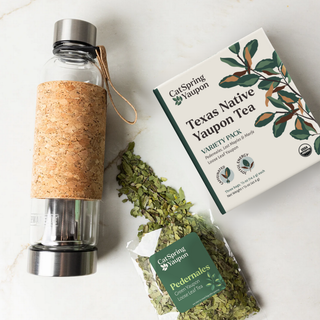
CatSpring yaupon tea, sourced from yaupon holly groves in Central Texas, delivers this trifecta the way the plant intended. No extraction. No isolation. Just yaupon leaves, dried and brewed.
How to Brew Yaupon Tea
Brewing yaupon tea is forgiving. Unlike Camellia sinensis teas, where oversteeping creates bitterness, yaupon tea can be steeped multiple times without becoming bitter.
-
Loose leaf yaupon tea is the preferred method for most people who drink yaupon regularly. Use about one tablespoon of loose leaf yaupon per cup. Pour hot water (just off boiling water, around 200-212°F) over the yaupon leaves and let them steep for 3 to 5 minutes.
-
Tea bag yaupon tea works just as well for convenience. Drop a yaupon tea bag into your cup, add hot water, and steep for 3 to 7 minutes.
-
Multiple steeps. Yaupon leaves can be steeped multiple times. The second and third steeps still deliver caffeine content, though the caffeine per cup decreases slightly with each steep. Many yaupon tea drinkers get three or more steeps from a single serving of loose-leaf yaupon, making yaupon tea one of the most economical naturally caffeinated options available.
Whether you prefer your yaupon tea hot or iced, as a blend or straight, the caffeine content per cup stays consistent with the brewing method above.
The Only Naturally Caffeinated Plant Native to North America
Yaupon holly is the only naturally caffeinated plant native to North America. Not one of a few. The only one.

Cassina, sometimes mentioned in colonial records, is actually another name for yaupon tea itself. Cacao contains caffeine and theobromine, but it's native to Central and South America. Yerba mate is a close botanical cousin of yaupon holly (both are holly species), but it grows wild in South America. Cascara comes from the fruit of the coffee plant, and coffee is native to Africa. Labrador tea, brewed by Native Americans across northern regions, contains no caffeine at all. Mormon tea provides stimulation through ephedrine, not caffeine. And dandelion root, despite its popularity as a coffee alternative, contains no caffeine.
That leaves yaupon holly standing alone.
The Name That Set Yaupon Back
The name Ilex vomitoria deserves correction. European colonists watched Native American tribes drink large quantities of the black drink (yaupon tea used in ceremony) and assumed the plant caused the vomiting. It didn't. The purging was intentional and ritualistic, a social drink tradition, not a side effect. The misleading Latin name stuck, and it likely contributed to yaupon tea being overlooked while coffee and Camellia sinensis tea imports dominated American culture after the Civil War.
Native Americans across the Southeast brewed yaupon leaves for thousands of years before anyone on this continent had heard of coffee. They understood something we're rediscovering with the rise of yaupon: that this naturally caffeinated plant offers something genuinely different from any other caffeine source on the continent.
Where This Leaves Your Cup of Yaupon Tea
Does the way a plant delivers caffeine matter more than the caffeine content itself? After tracing the caffeine in yaupon tea through adenosine receptors and into its three-compound system, the answer is clear.
Yaupon tea's caffeine trifecta isn't a trend. It's just how the yaupon holly plant grows. CatSpring yaupon tea lets you experience that system as it was meant to be. Loose-leaf yaupon, nothing added, nothing removed. The rise of yaupon tea is the rediscovery of a naturally caffeinated plant that was here long before coffee or Camellia sinensis tea reached these shores.
Brew a cup. Whether you choose loose leaf or a tea bag, let it steep as long as you like. Then notice what didn't happen. No spike, no crash, no jitters. That's the trifecta, doing what coffee never could.


