

The question of the best tea for singers doesn't have a single answer, but it has a consistent theme: warm, gentle, and easy on the throat.
Before You Take the Stage
Preparing for a performance involves more than warming up your voice. Staying hydrated, managing nerves, and keeping the throat comfortable all play a role, especially when congestion, dryness, or fatigue show up at the wrong time.
Hydration is the foundation. Tea is the warm, intentional layer on top. Water is always first, and the best performers know that the hour before a show is too late to start hydrating. What you drink the day before matters as much as what you reach for backstage.
For many singers and vocalists, tea becomes part of that preparation. Not as a cure-all, but as a steady, supportive routine, something warm, gentle, and familiar before stepping on stage.

The 7 Best Teas for Singers
Here are seven teas singers and vocalists often reach for, starting with one that's uniquely easy on the throat. These are the teas people lean on to support the vocal cords, stay comfortable before a show, or stay warm and hydrated during a long rehearsal.
1. Yaupon Tea
Smooth energy without dryness or bitterness

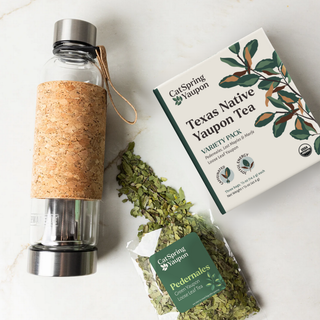
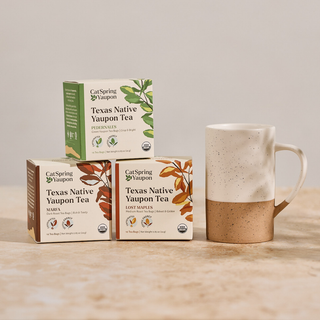
Yaupon is America's only native caffeinated plant, traditionally brewed for centuries and naturally smooth in character, as noted by the National Park Service. Unlike many traditional teas, yaupon contains little to no tannins, which means it doesn't leave the mouth feeling dry or astringent. For singers and vocalists focused on vocal health, that's a meaningful difference.
It offers a gentle lift without the sharp spike or crash of coffee, making it a thoughtful option before rehearsals or performances. The trifecta of caffeine, theobromine, and theacrine creates steady, joyful energy without the edge that can feel counterproductive right before you go on.
Why singers like it:
-
Smooth, non-bitter brew, easy on the vocal cords.
-
Gentle, steady energy without jitters or a crash.
-
Easy to sip without drying the throat.
Best enjoyed: warm or lightly cooled, plain or with a touch of honey
2. Ginger Tea
Warming and grounding

Ginger tea has long been used as a comforting, warming drink. Its bold, familiar flavor makes it a popular choice when the throat feels overworked or the body needs settling before a performance.
Many singers enjoy ginger tea with honey as part of a pre-show routine, especially when they want something that feels naturally grounding without caffeine.
Why singers reach for it:
-
Naturally warming and easy on the stomach.
-
Familiar, comforting flavor.
-
Pairs well with honey.
3. Chamomile Tea
Calm, gentle, and evening-friendly

Chamomile is known for its calming qualities and light floral flavor. For singers dealing with pre-performance nerves or winding down after a show, chamomile can feel especially supportive for vocal health routines.
Because it's caffeine-free, it's often reserved for evening rehearsals or post-performance recovery.
Why singers enjoy it:
-
Gentle and soothing with a light floral character.
-
Light, easy-drinking flavor.
-
Supports relaxation after a long day of singing.
4. Licorice Root Tea
Throat-coating and comforting

Licorice root tea has a naturally sweet flavor and is often described as throat-coating, which is why singers sometimes turn to it when their voice feels strained or dry. It's a familiar ingredient in commercial throat coat tea blends, though it works well on its own too.
It's best enjoyed occasionally rather than daily, and in moderation.
Why singers use it:
-
Naturally soothing mouthfeel.
-
Comforting warmth and a naturally sweet character.
-
Often blended with other herbs for a fuller herbal experience.
5. Peppermint Tea
Clear and refreshing

Peppermint tea offers a crisp, cooling sensation that many singers enjoy when congestion or heaviness is present. Its refreshing aroma and flavor can feel clarifying before vocal warmups.
That said, some singers avoid it if they're sensitive to reflux, or if they find it creates more mucus drainage than they want right before a performance. Best to test it on a rehearsal day first.
Why singers like it:
-
Fresh, clean taste with a cooling finish.
-
Cooling sensation that can help with congestion.
-
Helps you feel clear and awake before a performance.
6. Green Tea
Light, focused energy

Green tea provides a lighter caffeine lift than coffee and is often appreciated for its clean taste. Because it does contain tannins, singers typically steep it briefly, 2-3 minutes, and sip mindfully. Over-steeping increases tannin extraction, which can create a drying, astringent feeling in the mouth.
For singers who want gentle caffeinated support without the edge of coffee, green tea is a familiar option worth trying on lower-stakes days.
Why singers choose it:
-
Light caffeine support for focus and energy.
-
Fresh, vegetal flavor that's clean and easy to drink.
-
Familiar option for tea drinkers building a vocal care routine.
7. Ginseng Tea
Traditionally used for stamina

Ginseng tea has a long history of use and is associated with vitality and endurance in traditional medicine. Some singers enjoy it during long rehearsal periods when stamina matters most.
Its flavor is earthy and distinct, making it more of an acquired taste.
Why singers explore it:
-
Traditionally associated with vitality and staying power.
-
Earthy, grounding character.
-
Often used occasionally rather than as a daily tea.
Warm, Not Hot
The temperature of your tea matters more than most brewing guides admit. The throat is doing real work. Asking it to handle boiling liquid in the hour before you go on is a bit like warming up on a frozen track.
Many performers find warm drinks gentler than very hot ones before a show. Aim for a comfortable sipping temperature: warm enough to feel soothing, not so hot it adds unnecessary stress to tissue that's about to do a lot of work.
Yaupon is particularly forgiving here because it doesn't require precision steeping. Brew it, let it rest, and drink it when it feels right. You can't over-steep it, so there's no penalty for waiting until the cup is exactly where you want it.
On the cold end: many performers prefer to skip iced options right before a show. Cold drinks can trigger an increased urge to clear the throat, which is the last thing you want before the first note. Room-temperature or warm is the conventional approach for a reason. Performers develop their own routines. This is one worth trying.
Caffeine Considerations for Performers
Not every performer wants caffeine before they go on. Not every performer can skip it. This is genuinely personal territory, and it's worth knowing your own body before a high-stakes performance rather than discovering your response mid-set.
Yaupon sits in an interesting middle. It contains a moderate amount of caffeine, lighter than coffee and in a similar range to a light green tea, paired with theobromine, the same compound found in chocolate. Most drinkers describe the combination as a smoother, steadier lift rather than a sharp spike.
For performers who want focus without jitters, yaupon or a lightly steeped green tea are common choices. For those who want to stay calm and caffeine-free before going on, chamomile and licorice root are warm-cup options that deliver comfort without stimulation.
The practical wisdom among performers is that caffeine's effect is more about individual variability than a universal rule. Know your own response. A pre-show rehearsal week is a better time to calibrate than the hour before curtain.
Hydration Pairing
Tea counts toward your daily fluid intake, but it doesn't replace water. Going into a performance, water is the anchor. Tea is the warm, intentional layer on top.
A simple pairing habit that works for many performers: one glass of water for every cup of tea. It keeps the hydration foundation solid while still leaving room for the warm pause that tea provides.
Yaupon's naturally low tannin content makes it easier to sip without the dry, astringent feeling that strong black tea or over-steeped green tea can leave behind. For singers who are already managing a dry throat before a performance, that difference is noticeable.
Start the day before, not the hour before. A well-hydrated voice on performance day begins with the 24 hours leading up to it. Honey in warm water or tea is a common addition for performers. It coats the pharynx and can ease the scratchy feeling that triggers throat-clearing. Think of it as comfort care, not a cure.
A note on voice loss: when searching for the best tea for lost voice situations, the honest answer is that tea can support comfort and hydration, but laryngitis or a genuinely strained voice requires rest and medical care, not a specific blend. There's no tea for vocal cords that have been pushed too hard. Warm, soothing teas are a sensible companion during recovery, not a treatment. The same is true for tea for vocalists generally: it's a comfort and hydration tool, not a substitute for technique, rest, or a doctor when something is genuinely wrong.
Brewing for Vocal Comfort
Brewing tea for a performance is different from brewing tea on a slow Sunday morning. You're on a schedule. You want consistency. You want the cup at the right temperature when you actually need it.
Practical notes by tea:
- Yaupon: Steep 3-5 minutes at any temperature. Impossible to over-steep. Pour into a thermos to hold temperature backstage through a long rehearsal or a backstage wait.
- Chamomile: Steep 5-7 minutes in hot water, then let it cool before sipping. Its mild flavor doesn't need much fuss.
- Ginger: 5-10 minutes depending on how bold you want it. Taste as you go.
- Licorice root: 5-7 minutes. Naturally sweet, no sweetener needed.
- Green tea: 2-3 minutes max. Steeping longer increases bitterness and tannins. Keep it light before a performance.
The thermos is the most underrated tool in a performer's backstage kit. Pre-brew before the last 20 minutes before curtain, pour it in, and it's waiting at the right temperature when you need it.
Some performers make brewing the first step in a pre-show routine. The kettle, the steep, the wait. It signals the shift from preparation to performance without rushing. Loose leaf tea adds a small practice of its own. A CatSpring yaupon brew takes about five minutes from start to first sip, and you can read through your notes or mark up your music while it steeps.
Teas to Approach with Care Before Performing
Not every tea works for every voice. This is the honest counterweight to the list above. It's not a warning label. It's the kind of thing a performer learns through experience, and it's worth thinking through before show day rather than during it.
A few things to know:
- Very tannic teas: Strong black tea and over-steeped green tea can feel drying to some singers. The tannins create an astringent sensation in the mouth and throat. If you're already managing dryness, these are worth avoiding right before you go on.
- Peppermint: Thins mucus for some people. Some singers find that clarifying. Others find it creates too much drainage or affects the reflux response. Test on a rehearsal day, not opening night.
- Dairy additions: Milk, oat milk, and cream coat differently for different voices. Many performers avoid dairy close to a performance because it can thicken mucus and increase the urge to clear the throat. Honey is generally fine for most.
- Too much of anything: Even chamomile in large amounts can cause drowsiness, which is not ideal before going on. Moderation applies to all of these.
The theme across all of this: your voice is yours. These are starting points, not prescriptions. The best time to figure out what works is in the weeks before a big performance, not the morning of. For vocalists dealing with a genuinely lost or strained voice, rest and medical advice come before any tea remedy.
The Bottom Line
Singing is personal, and so is preparation. The best tea for singers is one that feels supportive rather than distracting: hydrating, gentle, and easy to return to.
Whether you reach for something calming, warming, or lightly energizing, tea can be a steady companion before the lights come up and the first note is sung. The teas on this list each bring something different: chamomile for calm, ginger for warmth, licorice root for that throat-coating soothing quality, green tea for a lighter caffeine option.
For singers looking for smooth energy without bitterness or dryness, yaupon offers a uniquely gentle place to start. Wild-harvested in Texas and naturally low in tannins, it's a practical choice for performers who want the warmth and focus of a caffeinated tea without the dryness that can come from higher-tannin options. The vocal care routine is yours to build. Yaupon is a good place to begin.

Medical Disclaimer
This article is for informational purposes only and is not intended as medical advice. Individual responses may vary. Please consult a healthcare professional with specific health concerns.


