

Period pain has a way of arriving on its own schedule. From lower abdominal discomfort to back tension and fatigue, the physical side of a menstrual cycle can interrupt even the most ordinary days.
While there's no one-size-fits-all solution, many people turn to warm herbal teas as part of a supportive routine. Not as a cure, but as a gentle way to introduce warmth, hydration, and moments of calm when the body needs it most.
Below are five teas commonly enjoyed during menstruation, each valued for its comforting qualities and ease of brewing.
Understanding Menstrual Cramps
Menstrual cramps, also known as dysmenorrhea, happen when the uterus contracts to shed its lining. These contractions can cause menstrual pain in the lower abdomen, back, or thighs, and their intensity can vary from cycle to cycle.
For some, cramps are mild and manageable. For others, they can be more disruptive. If period pain is severe, persistent, or accompanied by heavy bleeding or other unusual symptoms, it's important to speak with a healthcare provider.
Tea can be part of a comfort-focused routine, but it shouldn't replace medical care when it's needed.
1. Yaupon Tea
A smooth, steady option

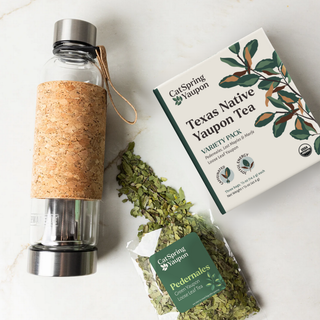
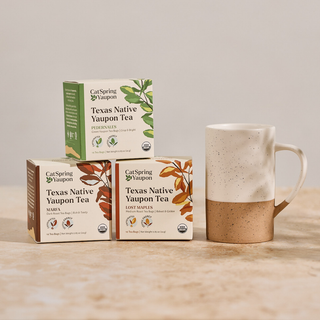
Yaupon is America's only native caffeinated plant, traditionally brewed for centuries and known for its naturally smooth character. Unlike many traditional herbal teas, yaupon contains no tannins, which means it doesn't leave the mouth feeling dry or astringent.
Some people appreciate yaupon during their cycle for its gentle lift and balanced feel, especially when fatigue or low energy is present. It's a grounding, warm option that's easy to brew any day of the month.
Why people reach for it:
-
Naturally smooth and easy to sip
-
Gentle caffeine without sharp spikes
-
Warm and grounding when brewed lightly
2. Ginger Tea
Warming and familiar

Ginger tea is widely enjoyed for its warming quality and bold, familiar flavor. Many people turn to it when their stomach feels unsettled or when they want something comforting during their period. Research suggests ginger's natural anti-inflammatory properties may help reduce feelings of discomfort during the cycle.
It's often enjoyed on its own or with a bit of honey.
Why people enjoy it:
-
Naturally warming
-
Comforting, familiar taste
-
Often included in soothing routines
3. Chamomile Tea
Calm and comforting

Chamomile tea is known for its gentle, floral flavor and calming nature. It's frequently enjoyed during the evening or before rest, especially when cramps are paired with tension or disrupted sleep. Some find that chamomile herbal teas may help reduce feelings of restlessness during the day.
Because it's caffeine-free, it fits easily into nighttime routines.
Why people choose it:
-
Light, soothing taste
-
Often associated with relaxation
-
Gentle enough for evening use
4. Peppermint Tea
Cooling and refreshing

Peppermint tea offers a clean, cooling sensation that some people find helpful when discomfort is paired with bloating or digestive unease. Its crisp flavor can feel refreshing, like a reset mid-period when warmth alone isn't quite what the body is asking for. Those sensitive to reflux may prefer other options.
Why people reach for it:
-
Fresh, cooling taste
-
Naturally caffeine-free
-
Often enjoyed after meals
5. Red Raspberry Leaf Tea
Traditionally associated with menstrual support

Red raspberry leaf tea has a long history of traditional use in menstrual and reproductive wellness. Its mild, earthy flavor makes it easy to incorporate into a routine, and many people enjoy it during different phases of their cycle. Like other herbal teas on this list, it works best as part of a broader approach to cycle health.
Why people include it:
-
Mild, approachable flavor
-
Traditionally used in menstrual routines
-
Easy to drink warm
Brewing a Cup of Comfort
When your period has you reaching for the kettle, how you brew matters almost as much as what you brew. A few notes from our farm in Cat Spring, Texas, where we've been hand-roasting wild-harvested yaupon for over a decade:
-
Yaupon is impossible to over-steep. Most herbal teas turn bitter if you forget them. Yaupon never does, because the leaf carries little to no tannins. Pour water just off the boil, use whichever steeping method fits your kitchen, and let it sit. Five minutes makes a gentle cup, fifteen a deeper one. Neither will turn on you.
-
Match the roast to the moment. Our light and dark roasts brew differently: light is bright and grassy, a good companion for mornings when fatigue is part of the picture. Dark is rounder and toastier, closer to black tea, and pairs well with honey in the evening.
-
Mind the caffeine clock. Yaupon's caffeine is gentler than coffee's, with theobromine for a steadier lift. Many people enjoy it through the morning and early afternoon, then shift to caffeine-free herbal teas like chamomile, peppermint, or red raspberry leaf as the day winds down.
-
Let the cup slow you down. The comfort is partly the warmth, partly the pause. Set the kettle, wrap your hands around something warm, and take ten minutes that belong to no one else.
Additional Ways to Support Comfort
Tea tends to work best when paired with other supportive habits, such as:
-
Applying heat to the lower abdomen or back
-
Staying well hydrated with water throughout the day
-
Prioritizing rest and gentle movement
-
Eating balanced meals and nourishing foods
Listening to your body, and adjusting from cycle to cycle, matters most.
What to Pour Into Your Cycle Routine
Menstrual cramps are personal, and so are the ways people care for themselves during their period. Tea isn't a treatment for menstrual pain, but many people find that warm, gentle brews offer moments of comfort, grounding, and ease when they need it most.
From the smooth steadiness of yaupon to the calming presence of chamomile, these teas can be part of a supportive rhythm. Explore the best teas for stress relief or shop the full range at CatSpring Yaupon. One cup at a time, one day at a time.

Medical Disclaimer
This article is for informational purposes only and is not intended as medical advice. Individual experiences with menstrual symptoms vary. If you experience severe, persistent, or worsening pain, heavy bleeding, or other concerning symptoms, please consult a qualified healthcare professional. This content is not intended to diagnose, treat, cure, or prevent any medical condition.


